Pakistan's digital infrastructure plans have moved from policy documents to concrete buildings in 2026. In August, ZTE and the local cloud provider SKY47 launched Karakoram-01 in Islamabad, described as Pakistan's first purpose-built, AI-ready Tier III data centre, with a total power capacity of 8.5 MW.
Ten months ago, Pakistan's problem with liquefied natural gas was that it had too much of it. In December 2025 the Petroleum Division approved an Annual Delivery Plan for 2026 that sent 35 contracted cargoes abroad: 24 from Qatar under the Net Proceeds Differential clause and 11 from Eni under a negotiated settlement with Pakistan LNG Limited.
Virginia now has an official count of the machines that keep its data centers running when the grid fails. A report delivered to the General Assembly's money committees on October 1, 2026 by the staff of the State Corporation Commission (SCC), compiled with the Department of Environmental Quality (DEQ), lists 10,290 permitted Tier 2 (or earlier) generator sets at data centers with a combined capacity of 26,718 MW, and 3,477 Tier 4 or Tier 4-equivalent sets with 6,414 MW.
The war that closed the Strait of Hormuz at the end of February has done two things to American LNG at once. In the short run it turned every working US liquefaction train into a strategic asset, with Europe and Asia bidding hard for flexible cargoes.
In May 2025 Pakistan's finance ministry announced that the government had allocated 2,000 MW of electricity in the first phase of a national initiative to power bitcoin mining and AI data centres. The pitch was simple.
PJM Interconnection's Reliability Backstop Procurement was designed to buy about 6.8 GW of new generation to close a capacity shortfall driven by data center demand. It did not open on September 30 as planned.
For the second time since the Iran war began, Pakistan is burning furnace oil to keep the evening peak covered without buying spot LNG. An official at the Independent System and Market Operator told Arab News on Friday that at least 800 MW is being generated from furnace oil between 5 pm and 1 am, out of 1,400 MW of available furnace oil capacity, "to limit the import of RLNG".
Seven months into the war with Iran, the crude oil numbers out of the Gulf look close to normal. Kpler data cited by BBC Verify show daily oil flow from the Middle East at 92 per cent of its pre-war baseline in the final week of September.
For most of 2026, a household in Lahore or Peshawar that wanted to connect a rooftop solar system to the grid has had to deal with two regulators of a sort. The first was the familiar one, the distribution company that owns the transformer outside the house and installs the meter.
Next week's policy round of the IMF review is expected to settle a reform that Pakistan has discussed for years: replacing tariff-based electricity subsidies for poor households with direct cash transfers through the Benazir Income Support Programme. According to Business Recorder and Dawn, both sides expect to finalise the practical modalities, including how eligible consumers are identified and how money reaches them.
The war that closed the Strait of Hormuz at the end of February 2026 sent gas prices in Asia and Europe to their highest levels since the 2022 crisis. In the United States, gas got cheaper.
Almost no coal moves through the Strait of Hormuz. The Middle East is neither a large producer nor a large consumer of the fuel, and the International Energy Agency says as much in its Coal Mid-Year Update 2026.
On the surface, the US gas market enters winter in comfortable shape. The Energy Information Administration's storage report released on 1 October put Lower 48 working gas at 3,415 Bcf for the week ending 25 September, 79 Bcf above the five-year average.
Texas is about to test how much new demand its gas fields can serve at once. On one side are liquefied natural gas (LNG) export plants along the Gulf Coast, several of which started up or reached final investment decision in 2026.
On 25 September 2026 the PJM Transmission Owners and the PJM Area Relevant State Entities Committee told the Federal Energy Regulatory Commission that, after years of talks and a spell with the Commission's own Dispute Resolution Service, they could not agree on who pays for long-term regional transmission across PJM. They have discontinued their discussions.
On 26 September 2026, ERCOT’s system peak still looked like late summer: Eden Energy’s prior-day recap puts actual load near 78.5 GW in hour ending 17, with Dallas, Austin, and San Antonio in the mid-90s°F and Houston near 90°F. Net load rose into the evening as solar declined – the classic ramp shape. What did not appear was a scarcity-style spike.
Serial interconnection studies break when the next applicant changes the base case of the one ahead of it. That is the physical problem ERCOT faced as hyperscale sites, crypto plants and heavy industry piled into the same transmission corridors.
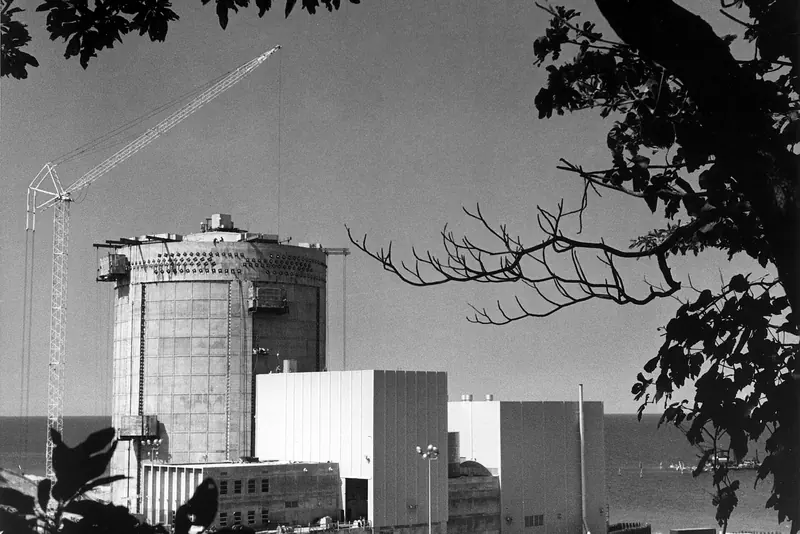
Holtec International's effort to restart the Palisades nuclear plant in Michigan, the first attempt in US history to bring a decommissioned reactor back into commercial service, has suffered another setback. Fuel loading began on August 30, 2026, as the plant entered Mode 6, the refueling stage.
Seven months after the Middle East war began, Middle East crude oil exports have risen to their highest monthly level since hostilities started, and Qatar linked LNG tankers have again been observed crossing the Strait of Hormuz after a blank August. Those are the central facts in late September reporting by Euronews and in Kpler’s media briefing dated 28 September 2026.
IGCEP 2025-35 sensitivities reported in April 2026 included cases with and without a candidate interconnection between the National Grid Company system and K-Electric, plus a case with KE’s committed renewables. Installed capacity outcomes shifted across those sensitivities, underscoring a structural fact outsiders often miss: Pakistan still plans and operates as linked but distinct electricity systems.
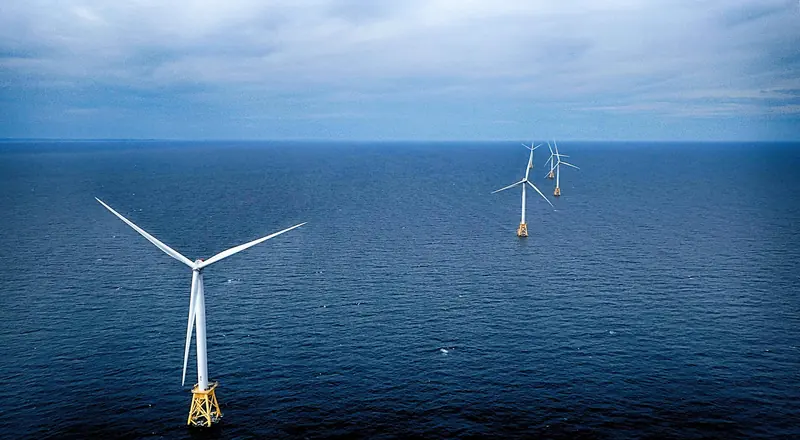
On September 18, 2026, the developers of Revolution Wind confirmed that the 65th and final turbine had been installed at the project, about 15 miles south of the Rhode Island coast. The 704-megawatt wind farm, a 50/50 joint venture between Ørsted and Skyborn Renewables, a Global Infrastructure Partners company, has been delivering power to Rhode Island and Connecticut at partial output since March and is expected to reach full capacity later this year.
Two of the biggest stories in American energy this year draw on the same resource. Between March and June, three large LNG export projects reached final investment decision: Phase 2 of Venture Global's CP2 LNG on March 13, Caturus's 9.5 million metric ton per year Commonwealth LNG on May 15, and Delfin Midstream's first floating liquefaction vessel on June 3.
Profit by Pakistan Today reported on 18 September 2026 that a National Assembly privatisation committee was told the approved structure would divest between 51 and 100 per cent of each Disco along with management control. Alvarez & Marsal had completed due diligence; Privatisation Commission and CCoP approvals of restructuring were in hand.
EIA's Short-Term Energy Outlook released on 9 September 2026 states that the United States uses record amounts of electricity in the forecast. Electricity sales are expected to total 4,135 billion kilowatthours in 2026 and 4,211 billion kilowatthours in 2027, driven by data-centre development and increased manufacturing in the commercial and industrial sectors.
When the presidents of the United Arab Emirates and the United States unveiled a 5 GW AI campus in Abu Dhabi on 15 May 2025, the pitch was simple: abundant power, deep capital and a location within 3,200 km of nearly half the world's population. Sixteen months later, the war that closed the Strait of Hormuz has added a requirement nobody had priced in.
September 2026 coincides with the scheduled end of OPEC+'s eighteen-month voluntary cut restoration path that began in April 2025. Whether every scheduled barrel has returned is an empirical compliance question; the architecture's intent was clear in Enerdata's March 2025 record.
The bidding window for Germany's first auction of long-term capacity under the new electricity supply security and capacity law, the StromVKG, closed on 8 September 2026. The next day the Bundesnetzagentur said the round had been clearly oversubscribed.
Winter Storm Fern swept across large parts of the United States in late January 2026, bringing ice, snow and extreme cold from Texas to the Mid-Atlantic. The storm caused more than 1 million customer power outages, mainly from ice accumulation, falling trees and damage to local distribution lines, according to post-event assessments.
Oil prices are the most visible meter of a Middle East supply shock, and also the easiest to misread. The figures here are published EIA Short-Term Energy Outlook figures as reported by Oil and Gas Journal and Reuters, and to spot levels those outlets attribute to named sessions.
Energy Update reported on 10 September 2026 that ISMO had begun collecting project data for IGCEP 2027-37, with stakeholder returns due by 14 September, even though NEPRA had not yet formally notified IGCEP 2025-35 and had raised questions on 7 May 2026. The Grid Code’s annual planning duty does not pause for regulatory backlog.
China's carbon dioxide emissions fell by 1 per cent in the second quarter of 2026, according to analysis by Lauri Myllyvirta of the Centre for Research on Energy and Clean Air, published by Carbon Brief on 3 September. What makes the result unusual is its cause.
Autumn 2026 European power planning inherits the 2024-25 evidence base. Renewables reached 47% of the EU mix in 2024 with wholesale benchmarks near 74 to 82 euros per MWh depending on the series, far below 2022's 227 euros average in Eurelectric's path.
On 6 September 2026 ProPakistani reported that the federal government had cleared 11,695 pending net-metering applications on instructions from Power Minister Awais Leghari, out of 16,654 cases pending during the transition to net billing. PITC began contacting cleared applicants through text and WhatsApp, warning them not to pay intermediaries.
South Korea has decided that the answer to its data centre power problem is geography. On 26 August 2026, the Ministry of Climate, Energy and Environment and the state utility Korea Electric Power Corp (KEPCO) presented the design of the country's first regional industrial electricity pricing system at a public hearing.
Arab News reported in late August 2026 that Pakistani authorities had ordered distribution companies and PITC to clear eligible rooftop solar connections initiated before the February net-billing cutoff, specifically where consumers had paid demand notices, received licences, undergone meter changes, and executed connection orders prior to 9 February 2026. DISCOs that slow-walk eligible legacy connections undermine NEPRA’s grandfathering logic and invite court petitions that could unsettle the entire Prosumer Regulations package.
China's EV-driven oil substitution is one reason fuel demand plateaued near 8.1 million barrels per day for gasoline, jet and diesel in 2024 even as petrochemicals grew. The mirror image is intense Chinese centrality in battery material refining and equipment.
Japan's electricity planners have two problems that are starting to overlap. The first is forecasting how much power new data centres will need and when.
The 2026 Middle East war transmitted into electricity systems through oil and gas prices, not through a single global power price. When Dated Brent reached 144 United States dollars per barrel in early April, and when LNG supplies from Qatar and the United Arab Emirates fell by over 300 million cubic metres per day from 1 March, the cost of fuels that set or influence power prices rose sharply.
Iraq is ending another summer of long power cuts, with the gap between demand and supply wider than in recent years. The main new factor is the collapse of Iranian gas supplies.
EIA's 16 April 2026 Today in Energy analysis, drawing on the Short-Term Energy Outlook, forecasts that United States net natural gas exports will grow 18 percent to 18.7 billion cubic feet per day in 2026 and another 10 percent to 20.5 billion cubic feet per day in 2027. Current United States peak export capacity is given as 18.3 billion cubic feet per day.
India met an all-time peak electricity demand of 270.8 GW in May 2026, the government told Parliament on 10 August. The Ministry of Power said peak demand had risen by around 12 per cent compared with the same period a year earlier, as El Niño conditions intensified the summer heat.
On 3 August 2026 Governor Greg Abbott directed the Public Utility Commission of Texas and ERCOT to complete a comprehensive verification and audit of all data centres advancing through the interconnection process before allowing those loads to proceed. ERCOT's response was immediate and mechanical.
Global insured losses from natural catastrophes totalled an estimated $42 billion in the first half of 2026, the lowest first-half figure since 2020 and 16% below the 2016 to 2025 average, Swiss Re Institute said on 11 August 2026. Severe convective storms, which bring hail, tornadoes and damaging winds, remained the largest driver, with insured losses of about $28 billion, though that was below the long-term trend.
A drought stretching from the Rhine delta to the lower Danube cut hydropower output across seven European countries by about one fifth between April and July 2026, according to an analysis of river flow, generation and price data published by pv magazine on 10 August. Nuclear plants on the Danube also reduced output as river flows fell to their lowest levels in seven years, while wholesale power prices rose steadily through the summer.
The IGU's World LNG Report 2026, released 7 July 2026, prints a record: global LNG trade at 437 million tonnes in 2025, up 6.3%, the strongest growth since 2022. Detailed graphics put the figure at 436.98 million tonnes from 24 exporting markets to 50 importing markets, with re-exports stable near 4.91 million tonnes.
The Eaton fire, which killed 19 people and destroyed or damaged more than 9,000 homes and businesses in the Altadena area in January 2025, was caused by electrical arcing on an out-of-service Southern California Edison transmission tower, according to investigative reports released by the Los Angeles County Fire Department on August 4, 2026. The investigation was conducted jointly with CAL FIRE over 18 months, with retained electrical and metallurgical experts.
For most of the history of the North American grid, reliability standards have been written for the supply side. Generators, transmission owners, balancing authorities and planners must register with the North American Electric Reliability Corporation and comply with mandatory rules on everything from frequency response to cyber security.
ERCOT's update to the Texas Senate on July 29 contained a number that will be quoted for months: approximately 474 GW of large loads seeking interconnection to the grid, about 90% of them data centers, as of June 2026. For context, ERCOT's all-time peak demand record is 85,508 MW, set on August 10, 2023.
Business Recorder reported at the end of July 2026 that the Privatisation Commission Board had recommended Cabinet Committee approval of restructuring plans for FESCO, GEPCO, and IESCO, including a government-owned special purpose vehicle with authorised share capital of Rs 250 billion to carve out selected assets and liabilities. Carve-out SPVs are how governments make utility sales bankable when legacy liabilities would otherwise scare buyers.
Europe enters the second half of the 2026 injection season with its gas storage further behind than at any point since the 2022 crisis. ENTSOG's Summer Supply Outlook found that EU storage sites were just 28 per cent full on 1 April, about 314 TWh, lower than at the start of the previous three filling seasons and roughly in line with levels seen before 2022.
Microsoft's total greenhouse gas emissions rose 25% in its 2025 fiscal year, to 20.29 million metric tons of CO2 equivalent from 16.21 million metric tons the year before, according to the company's 2026 Environmental Sustainability Report, released on Friday, July 10. The company said the increase was primarily driven by the expansion of its data center infrastructure and by its decision to stop using non-additional, unbundled renewable energy certificates.
By July 2026 the Cape of Good Hope has been a primary Asia-Europe energy diversion route for well over two years. What began in November 2023 as an emergency response hardened into an operating assumption for many owners.
In July 2026 the United States Department of Energy released a draft National Transmission Needs Study for consultation and public comment under section 216(a)(1) of the Federal Power Act. The study identifies present or expected transmission capacity constraints or congestion that harm or may harm consumers and that transmission solutions could alleviate.
On 4 July 2026 the Government of India withdrew the Natural Gas (Supply Regulation) Order it had issued in March, ending four months of emergency gas rationing. The gazette notification said the conflict in the Middle East that had disrupted LNG shipments through the Strait of Hormuz was now subject to a ceasefire and negotiations, and that sea traffic through the strait had been permitted to resume.
PJM Interconnection, the grid operator for 13 states and the District of Columbia, set a preliminary all-time peak load of about 168,158 megawatts between 5 and 6 p.m. on July 2, 2026, according to a PJM update published on July 10. The previous record, 165,563 MW, was set on August 2, 2006.
Singapore has spent two years trying to grow its data centre sector without breaking its energy system. The Strait of Hormuz disruption has shown how exposed that system is to events thousands of kilometres away.
Google's electricity demand rose 37% in 2025, the largest load growth in the company's history, according to its 2026 Environmental Report released on...
EDF has temporarily shut down nuclear reactors at the Nogent-sur-Seine plant on the Seine and the Bugey plant on the Rhône as river temperatures rose during a record heatwave, Euronews reported on 25 June 2026. A reactor at the Golfech plant on the Garonne in south-western France had been taken offline earlier in the week, and output was reduced at several other sites across EDF's 57-reactor fleet.
Southwest Power Pool has quietly built the most complete set of large load rules of any US grid operator. In January the Federal Energy Regulatory Commission accepted SPP's High Impact Large Load study process, known as HILL, and the companion High Impact Large Load Generation Assessment, or HILLGA.
The Federal Energy Regulatory Commission had promised to act on large load interconnection by June 2026, and on June 18 it did, though not in the form many expected. Rather than issue a single national rule out of the advance notice of proposed rulemaking that the Secretary of Energy directed it to consider in October 2025, the Commission issued six tailored show cause orders under section 206 of the Federal Power Act, one to each of the regional transmission organizations and independent system operators it regulates: PJM, MISO, SPP, CAISO, ISO New England and NYISO.
The mid-year UN climate negotiations in Bonn, the 64th sessions of the UNFCCC subsidiary bodies, ran from 8 to 18 June 2026 and closed with few concrete outcomes. Negotiators failed to agree texts on the Global Goal on Adaptation and on the mitigation work programme, the only formal agenda item devoted specifically to cutting emissions.
Qatar’s liquefied natural gas industry sits at the centre of the 2026 Middle East energy shock because every LNG tanker leaving the country must pass through the Strait of Hormuz. Unlike Saudi Arabia and the United Arab Emirates, which can move some crude oil through bypass pipelines, Qatar has no alternative seaborne export route for LNG.
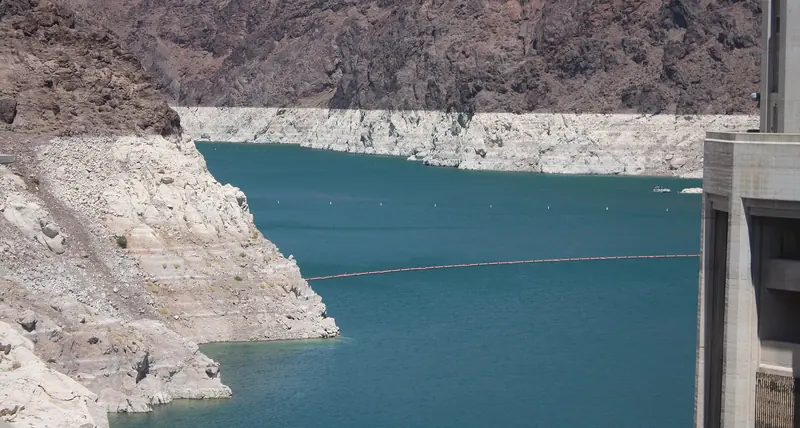
Lake Mead, the largest reservoir on the Colorado River, is expected to fall below an elevation of 1,035 feet above sea level within the next 12 months, possibly as early as late August, according to reporting by Circle of Blue published by Inside Climate News on June 12, 2026. At that level, generating capacity at Hoover Dam would be cut by 70%, because 12 of the dam's 17 turbines are not designed to operate in such low-water conditions.
June 2026 is a useful moment to separate European coal exit trajectories from Asia-Pacific seaborne reality. IEA Coal 2025 showed a 2024 trade record of 1,544 million tonnes, 85% imported by Asia-Pacific, then expected a 2025 decline to 1,468 million tonnes led by China.
After four years of de facto restriction, Ireland now has a formal route for new data centres to connect to the grid. On 12 December 2025 the Commission for Regulation of Utilities published its decision on a new electricity connection policy for data centres.
India's peak electricity demand reached a new all-time high of 270.82 GW on 21 May 2026, the fourth consecutive day of record demand, the Power Ministry said. The peak was met at 15:45 during solar hours.
Middle East LNG sits at the hinge of two 2025-26 facts. First, global LNG trade set records: IGU reported 436.98 million tonnes in 2025, up to a rounded 437 million tonnes, +6.3%, the strongest growth since 2022, with Middle East exports up 3.8 million tonnes and North America up 25.3 million tonnes.
The International Monetary Fund has published its staff report on Pakistan's third review under the Extended Fund Facility and second review under the Resilience and Sustainability Facility, IMF Country Report No. 26/101, dated 23 April 2026 and released on 14 May. The RSF is the IMF's climate-focused lending window, which provides longer-term financing tied to reforms that build resilience to climate shocks.
Spare oil production capacity is the volume that can be brought online quickly when war, accident, or sanctions remove barrels elsewhere. In a Middle East conflict that threatens Hormuz transit or Gulf loadings, the market's first question after how many barrels are disrupted is who can replace them, how fast, and through which route.
Methane emissions from fossil fuel operations showed no sign of falling in 2025, according to the International Energy Agency's Global Methane Tracker 2026, published on 4 May 2026. The IEA estimates that oil, gas and coal operations emitted 124 million tonnes of methane during the year.
The Midcontinent Independent System Operator released the results of its 2026 Planning Resource Auction on April 28, and the headline is relief rather than alarm. For the June 2026 to May 2027 planning year, summer capacity cleared at $424.30 per megawatt-day in Local Resource Zones 1 through 7, which cover parts of eleven states from Montana to Michigan.
Global insured losses from natural catastrophes reached $107 billion in 2025, according to Swiss Re Institute's sigma report on natural catastrophes, sigma 1/2026. The total came from 190 qualifying events.
Pakistan's Power Minister Awais Leghari has confirmed that the country is experiencing six to seven hours of load management a day, nearly three times the duration the government had previously announced, Dawn reported on 17 April 2026. He cited a sudden surge in demand, the unavailability of imported liquefied natural gas because of the Middle East crisis, and lower water discharges from dams.
Electricity demand from data centres rose by 17% in 2025, according to a new report from the International Energy Agency published on 16 April 2026. Demand from data centres focused on artificial intelligence grew even faster.
Iranian oil export volumes are among the most disputed numbers in the market because sanctions, ship-to-ship transfers, and opaque pricing complicate measurement. The most reliable picture comes from named trackers as the U.S. Energy Information Administration and the International Energy Agency publish them, read together with the caveats those agencies attach.
Emissions covered by the EU Emissions Trading System fell by 1.3% in 2025 compared with 2024, the European Commission said on 10 April 2026. The figures are based on verified emissions data reported by member states by the 31 March deadline and cover stationary installations, aviation and maritime transport.
For most of the past decade, the main complaint about Pakistan's LNG supply was that there was too much of it. As rooftop solar spread and industrial gas demand fell, the country found itself with surplus cargoes under long-term contracts with Qatar and Eni, and the government asked for some deliveries to be diverted or deferred.
For three years the Gulf states have pitched themselves as the natural home for the next generation of AI infrastructure. The argument rested on three pillars: abundant and cheap energy, deep sovereign capital, and political alignment with Washington.
The WMO, the UN agency for weather and climate, published its State of the Global Climate 2025 report in March 2026. The report finds that 2025 was 1.43°C, plus or minus 0.13°C, above the 1850 to 1900 average, making it the second or third warmest year on record depending on the dataset.
On March 11, 2026, the International Energy Agency announced that its member countries would make 400 million barrels of oil available from emergency stocks, the largest coordinated release in the agency's history. The Trump administration confirmed the same day that the United States would contribute 172 million barrels from the Strategic Petroleum Reserve, with deliveries rolling out over 120 days.
Since early March 2026, when Iran closed the Strait of Hormuz following the US and Israeli air strikes that began on 28 February, Japan and South Korea have faced the sharpest energy shock of any major industrial economies. Japan imports about 95 per cent of its crude oil from the Gulf and South Korea about 70 per cent, according to figures reported by The Straits Times.
China published the final text of its 15th Five-Year Plan on 13 March 2026, after the National People's Congress session that ran from 4 to 12 March. The plan covers 2026 to 2030, the years in which China has pledged to peak its carbon dioxide emissions.
The European Union's 2040 climate target has become law. Regulation (EU) 2026/667, which amends the European Climate Law to add an intermediate target for 2040, was adopted by the European Parliament and the Council on 11 March 2026 and published in the Official Journal on 18 March.
On 11 March 2026, the 32 member countries of the International Energy Agency unanimously agreed to make 400 million barrels of oil from emergency reserves available to the market, in response to the disruption caused by the war in the Middle East that began on 28 February. It is the sixth coordinated stock release in the agency's history, after actions in 1991, 2005, 2011 and twice in 2022, and by far the largest.
On 9 March 2026 Prime Minister Shehbaz Sharif announced a package of emergency austerity and fuel conservation measures in a televised address, warning that disruption to shipping through the Strait of Hormuz had placed Pakistan's economy under direct threat. Government employees moved to a four-day working week, with half of staff working from home on a rotating basis.
The war that began in the Middle East on 28 February 2026 has produced what the International Energy Agency describes as the largest supply disruption in the history of the global oil market. Within days of the outbreak of hostilities, tanker traffic through the Strait of Hormuz, the narrow passage linking the Persian Gulf to the Gulf of Oman and the Arabian Sea, fell sharply.
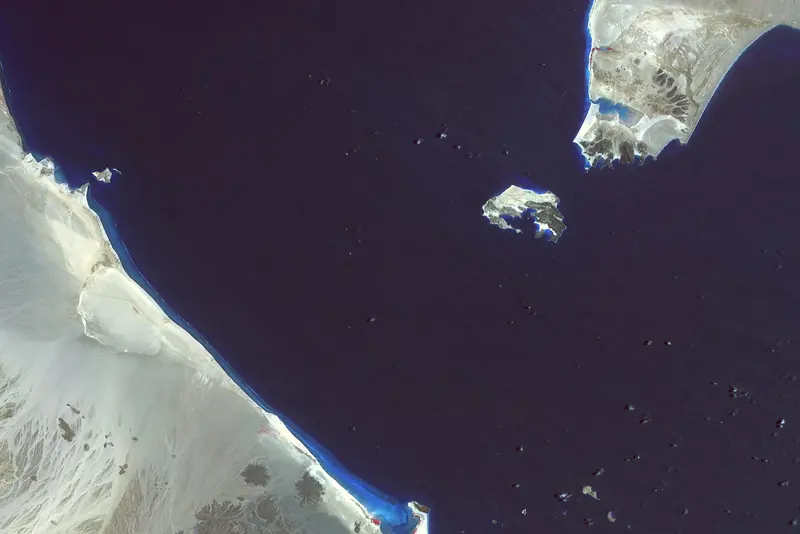
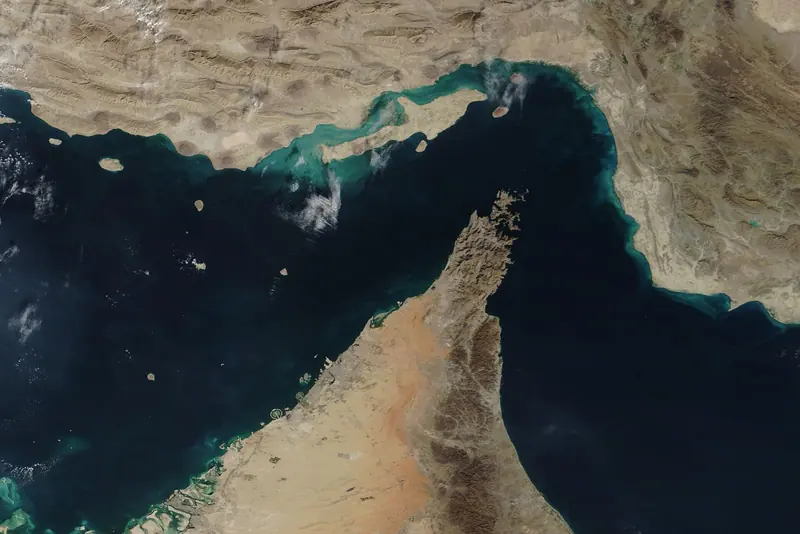
The Strait of Hormuz is not a metaphor. It is a narrow waterway between Oman and Iran that connects the Persian Gulf to the Gulf of Oman and the Arabian Sea, and it is deep and wide enough for the world's largest crude tankers.
Virginia hosts the largest concentration of data centers in the world, and its regulator has now built a rate structure around that fact. In its final order in Dominion Energy Virginia's 2025 biennial review, issued on November 25, 2025, the State Corporation Commission (SCC) created a new GS-5 rate class for customers demanding 25 megawatts or more.
The US Environmental Protection Agency has finalized the rescission of its 2009 greenhouse gas endangerment finding, the legal determination that has underpinned federal regulation of greenhouse gas emissions from vehicles for more than 15 years. The final rule was signed on February 12, 2026, published in the Federal Register on February 18 and takes effect on April 20, 2026.
Regulation (EU) 2026/261, which phases out imports of Russian natural gas into the European Union, entered into force on 3 February 2026 after formal adoption in late January. It is the legal end point of the REPowerEU strategy launched after Russia's full-scale invasion of Ukraine in 2022.
The National Energy Administration's year-end figures for 2025 mark the second capacity crossover in eighteen months. In mid-2024 wind and solar capacity overtook coal.
On 29 January 2026 Patrick Pouyanné, chairman and chief executive of TotalEnergies, met President Daniel Chapo at Afungi in Cabo Delgado province and announced the full restart of the Mozambique LNG project, onshore and offshore. It followed the partners' announcement in late October 2025 that they would lift the force majeure declared in 2021, formalised by a consortium decision on 7 November, when an insurgent attack on the nearby town of Palma forced the evacuation of the site.
The United States formally left the Paris Agreement on January 27, 2026. The withdrawal took effect one year after the United Nations received the formal notification, which President Donald Trump ordered on his first day back in office in January 2025.
PJM Interconnection's 2026 long-term load forecast does something that few forecasts in the data center era have done. It lowers expected demand for the next five years.
India's power distribution utilities have, taken together, reported a profit. The Ministry of Power announced on 18 January 2026 that distribution companies and state power departments recorded a combined profit after tax of 2,701 crore rupees in 2024-25.
India installed a record 37.9 GW of solar and 6.3 GW of wind in calendar year 2025, according to Ministry of New and Renewable Energy data reported by pv magazine India on 13 January 2026. Solar additions were 54.7 per cent higher than in 2024, and wind additions 85.3 per cent higher.
The Copernicus Climate Change Service, operated by the European Centre for Medium-Range Weather Forecasts on behalf of the European Commission, has ranked 2025 as the third warmest year in its records. In its Global Climate Highlights 2025 report, published in January 2026, Copernicus said the global average surface air temperature for the year was 14.97°C, which is 1.47°C above the 1850 to 1900 pre-industrial level.
Few questions in US power regulation have been argued as hard over the past two years as this one: when a data center is built next to a power plant and takes electricity directly from it, what does it owe the grid? On December 18, 2025, the Federal Energy Regulatory Commission gave PJM Interconnection its answer.
On 1 January 2026 the European Union's Carbon Border Adjustment Mechanism moved from its transitional reporting phase into its definitive regime. CBAM puts a carbon price on the emissions embedded in imports of cement, iron and steel, aluminium, fertilisers, electricity and hydrogen, so that imported goods face a cost comparable to that borne by EU producers under the Emissions Trading System.
India's nuclear legal framework changed in a single week this month. The Sustainable Harnessing and Advancement of Nuclear Energy for Transforming India Bill, 2025, known as SHANTI, was tabled in the Lok Sabha on 15 December, passed there on 17 December, passed by the Rajya Sabha on 18 December, and received presidential assent on 20 December.
PJM Interconnection's capacity market has now produced the result its critics and its defenders both feared. The 2027/2028 Base Residual Auction, published on December 17, cleared 134,479 MW of unforced capacity at the cap of $333.44 per megawatt-day across the whole footprint.
The United States has asked the European Union to exempt US natural gas from key requirements of the EU methane regulation, according to a document seen by Reuters and reported on 15 December 2025. The US request includes delaying the import obligations to 2035 and treating US federal rules as automatically equivalent to EU standards.
December 2025 is contracting season with an unusually wide European demand cone. ACER warned that EU LNG demand outlook faces up to 90 bcm of uncertainty between Fit for 55 and REPowerEU scenarios, and that without stronger decarbonisation beyond Fit for 55 the EU could need up to 30 bcm more LNG by 2030 than in 2024.
EIA's 25 February 2025 inventory showed generators planning 12.3 gigawatts of 2025 retirements, a 65 percent increase compared with 2024, after only 7.5 gigawatts retired in 2024, the least since 2011. Coal accounted for 66 percent of planned exits, or 8.1 gigawatts, equal to 4.7 percent of the coal fleet at the end of 2024.
Negotiators for the Council of the EU and the European Parliament reached a provisional political agreement in early December 2025 on the first omnibus simplification package, known as Omnibus I. The deal substantially narrows the scope of two flagship sustainability laws: the Corporate Sustainability Reporting Directive, or CSRD, and the Corporate Sustainability Due Diligence Directive, or CSDDD. Under the agreement, as summarised by law firms including Linklaters and A&O Shearman, the CSRD will apply to companies with more than 1,000 employees and net annual turnover above €450 million.
The COP30 climate conference in Belém, Brazil, ended on 22 November after negotiations that ran through the night and into Saturday morning. Its centrepiece was the Global Mutirão decision, named after an Indigenous Tupi-Guarani word for people working together towards a common aim.
The 30th UN climate conference in Belém, Brazil, closed with the adoption of a consensus package that the Brazilian presidency called the Belém Package. Its central text, the Global Mutirão decision, takes its name from an Indigenous Brazilian word for collective work.
The Fund for responding to Loss and Damage, created by agreement at COP27 in Sharm el-Sheikh in 2022 and operationalised at COP28 in Dubai, has launched its first call for funding requests. The call was announced at COP30 in Belém, Brazil, under what the fund calls the Barbados Implementation Modalities, a start-up phase named after the Barbados meeting of the fund's board at which the approach was agreed.
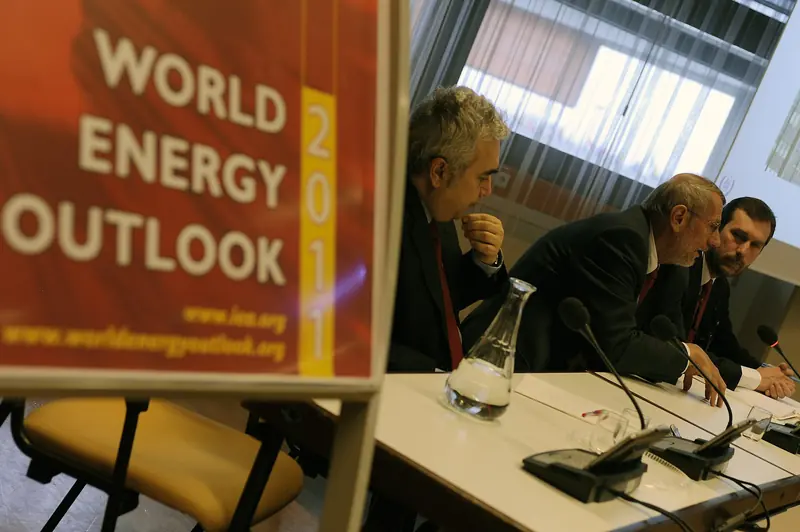
The International Energy Agency's World Energy Outlook 2025, released on 12 November, opens with a statement that sets the tone for the whole report: in a volatile world, energy security takes centre stage. The agency describes a backdrop of geopolitical fragility coexisting with subdued oil prices and a large surplus of oil supply over demand, countries prioritising security and affordability but reaching for different levers, fractures in the international trading system, and less momentum behind efforts to reduce emissions even as climate risks rise.
Federal energy messaging in 2025 returned emphatically to domestic production, exports and reliability. DOE's 20 January 2025 announcement ending the LNG export pause and restoring regular-order review of non-FTA applications is the clearest administrative marker.
On 5 November 2025 EU environment ministers agreed the Council's position on amending the European Climate Law to set a binding 2040 target of a 90 per cent reduction in net greenhouse gas emissions compared with 1990. The headline number is the one the Commission proposed in July.
China's 2024-25 energy import pattern is a lesson in fuel competition inside one industrial system. Coal imports hit a record 548 million tonnes in 2024 before the IEA expected a 2025 retreat toward 489 million tonnes on high stocks and soft demand.
Hurricane Melissa made landfall in south-western Jamaica on 28 October 2025 as a Category 5 hurricane, with maximum sustained winds of about 185 miles per hour, among the strongest Atlantic landfalls on record. By the evening of 28 October, more than 77% of customers of Jamaica Public Service, the island's electricity utility, were without power, according to the Jamaica Observer.
EU environment ministers meeting in Brussels on 5 November 2025 agreed the Council's position on the bloc's 2040 climate target after negotiations that ran through the night. The agreement keeps the headline goal proposed by the European Commission in July, a 90% reduction in net greenhouse gas emissions compared with 1990, but widens the flexibility in how it can be met.
The UN Environment Programme published its Emissions Gap Report 2025, titled Off Target, on 4 November, days before COP30 opens in Belém. The annual report assesses whether national pledges and policies put the world on course to meet the Paris Agreement's temperature goals.
Reuters reported in early November 2025 that Pakistan LNG Limited had arranged to cancel 21 cargoes under its long-term Eni contract, spanning planned 2026 and 2027 deliveries, at SNGPL’s request, with Eni agreeing under flexibility provisions. In a tight global LNG market, suppliers can often redeploy cargoes at stronger netbacks than soft long-term slopes provide.
The UN climate secretariat published its 2025 Nationally Determined Contributions Synthesis Report on 28 October, two weeks before COP30 opens in Belém. The report assesses the new national climate plans, covering targets for 2035, that parties to the Paris Agreement had formally submitted by 30 September.
On 16 October 2025 the Democratic Republic of Congo lifted the cobalt export ban it had imposed in February and replaced it with a quota system administered by ARECOMS, the authority that regulates and controls strategic mineral markets. Exports for the final quarter of 2025 were capped at 18,125 tonnes.
On 20 October 2025 Brazil's environmental agency, Ibama, granted Petrobras an operating licence to drill an exploratory well in block FZA-M-59 in the Foz do Amazonas basin, part of Brazil's Equatorial Margin. The well lies in deep water off the state of Amapá, about 175 kilometres from the coast and around 500 kilometres from the mouth of the Amazon river.
On 8 October 2025 India's Ministry of Environment, Forest and Climate Change notified the Greenhouse Gases Emission Intensity Target Rules, 2025. The rules set the country's first legally binding emission reduction targets for industry.
National generation plans are only as honest as the rooftop, captive, and feeder-level forecasts distribution companies supply, or fail to supply. In Pakistani planning language, distributed energy resources span net-metered and behind-the-meter solar, captive generation, small cogeneration, demand response, and eventually distribution-connected storage and electric-vehicle chargers.
Late 2025 oil balances sit at the intersection of three forces. First, OPEC+ is part-way through restoring 2.2 million barrels per day of voluntary cuts on an April 2025 to September 2026 path averaging about 137 thousand barrels per day per month, with pause rights retained.
On 3 October 2025 the expert panel set up by ENTSO-E to investigate the blackout of 28 April published its factual report. At 12:33 CEST that day continental Spain and Portugal lost all power.
Large loads co-located with generation have moved from niche arrangements to a central market-design problem. Technology firms want speed and firm power.
In late July 2025 President Donald Trump announced on Truth Social that the United States had concluded a deal with Pakistan under which the two countries would work together on developing Pakistan's "massive Oil Reserves", and that Washington was choosing the oil company to lead the partnership. The announcement accompanied a trade arrangement that left Pakistan facing a 19 per cent US tariff, lower than its South Asian neighbours and far below the 50 per cent applied to India.
On 24 September 2025, speaking by video to the United Nations Climate Summit in New York, President Xi Jinping announced China's nationally determined contribution for 2035. It was the first time China had set an absolute emissions reduction target.
When PJM Interconnection published the results of its 2026/2027 Base Residual Auction on July 22, the headline was the price. Every zone in the footprint cleared at $329.17 per megawatt-day of unforced capacity, the cap agreed with Pennsylvania's governor and approved by the Federal Energy Regulatory Commission.
On September 4, 2025, the US Department of Justice filed two civil lawsuits against Southern California Edison, the utility subsidiary of Edison International, seeking damages for wildfires it alleges were caused by the company's equipment. The first complaint concerns the Eaton fire, which began on January 7, 2025, in the hills above Altadena and Pasadena during an extreme Santa Ana wind event.
At the end of August 2025 the General Offices of the Communist Party of China Central Committee and the State Council published an opinion on promoting the green and low-carbon transition and strengthening the construction of the national carbon market. The document sets out a roadmap for China's emissions trading system through 2030, and it answers one of the main questions hanging over the market since its launch in 2021: when China will move from intensity-based allocation to absolute caps.
Texas is building data centers faster than almost any other state, and the water they need is becoming a planning issue. The Houston Advanced Research Center, an independent nonprofit research organization, estimates that existing data centers in Texas will consume about 25 billion gallons of water in 2025, or 0.4% of the state's total water use, according to reporting by The Texas Tribune.
Xcel Energy announced in late September 2025 that it had reached agreements in principle to resolve all litigation related to the Marshall fire, the wind-driven fire that swept through Boulder County, Colorado, on December 30, 2021. The settlement, which also involves the telecommunications companies Qwest and Teleport, totals about $640 million, according to Xcel and the Associated Press.
Chinese President Xi Jinping announced China's 2035 nationally determined contribution in video remarks to the UN Climate Summit in New York on 24 September 2025. It is the first time China has set an absolute emissions reduction target for its whole economy, rather than targets for carbon intensity or the timing of a peak.
Pakistan's 2025 monsoon has been the deadliest since the floods of 2022. In its update of 21 September, the National Disaster Management Authority reported that rains and floods had claimed 1,006 lives across the country since 26 June, and that more than 3.02 million people had been rescued or evacuated in relief operations, according to Pakistan Today's account of the update.
California Governor Gavin Newsom signed SB 254 on September 19, 2025. The bill, authored by state Senator Josh Becker, is a broad energy affordability package.
On 18 September 2025 Prime Minister Anthony Albanese, Treasurer Jim Chalmers and Climate Change and Energy Minister Chris Bowen announced that Australia would set its 2035 emissions target at a reduction of 62 to 70 per cent from 2005 levels. The government accepted the independent advice of the Climate Change Authority, which described the range as ambitious but achievable.
EIA's January 2025 Short-Term Energy Outlook materials projected that renewable energy sources would contribute one-quarter of United States electricity generation in 2025 for the first time, rising to 27 percent in 2026 in that forecast vintage. Natural gas remained the largest single share in the same table, with nuclear holding about a fifth.
On 9 September 2025 Prime Minister Abiy Ahmed formally inaugurated the Grand Ethiopian Renaissance Dam on the Blue Nile at Guba, near the Sudanese border. The dam reached its maximum output of 5,150 MW on the day, making it Africa's largest hydroelectric plant and putting it among the 20 largest in the world, at roughly a quarter of the capacity of China's Three Gorges.
Credit analyses published around Thar operators’ FY2025 performance sketched a national generation picture that deserves wider attention. Pakistan’s power sector generated 127,160 GWh in FY25, about six per cent below the reference target, against installed capacity reported at 45,888 MW.
September 2025 is a year on from the summer when European power markets proved that high renewable shares and lower wholesale averages can coexist with a growing flexibility deficit. Full-year 2024 data from the European Commission showed renewables at 47% of the mix, +93 TWh of renewable generation, solar +38 TWh, hydro +43 TWh, +59 GW of renewable capacity, fossil generation -10%, coal -27% (-54 TWh), gas generation -25% (-30 TWh), and a Power Benchmark at 74 euros per MWh (-22%).
Three and a half years after the full-scale invasion of Ukraine, the outcome of Western energy sanctions on Russia can be read in a few numbers. Russian crude exports are only modestly lower than before the war.
In early August 2025 Pakistan's Economic Coordination Committee approved a five-year subsidy scheme to support the rollout of 116,000 electric motorcycles and 3,170 electric rickshaws and loaders, at an estimated cost of around Rs100 billion. It is funded by a New Energy Vehicle Adoption Levy on conventional vehicles, charged at 1 per cent of the value of local and imported vehicles up to 1,300cc, 2 per cent between 1,300cc and 1,800cc, and 3 per cent above 1,800cc.
Ember's analysis of Chinese customs data, published in late August 2025, provides the clearest evidence yet that solar is taking off across Africa. Imports of solar panels from China rose 60 per cent in the 12 months to June 2025, to 15,032 MW, from 9,379 MW in the previous 12 months.
India's electricity demand peaked at about 242 gigawatts in June 2025, according to the power ministry, and was met with no shortage. That is below the all-time record of about 250 GW set on 30 May 2024 during a severe heatwave, and well below the 277 GW that the Central Electricity Authority had projected for the 2025 summer.
Through 2025 the system operator updated the Indicative Generation Capacity Expansion Plan into a 2025-35 revision, building on the April 2024 filing. The revision process itself tells a story: stakeholder fights over committed projects, shifting hydro CODs, and a demand profile disturbed by net metering.
Electricity demand growth has returned to the United States planning conversation. EIA's January 2025 Short-Term Energy Outlook press materials described 2 percent demand growth in 2024 and similar growth expected in 2025 and 2026, the first three-year stretch since 2005 to 2007, with industrial and data-centre commercial loads leading.
By August 2025 OPEC+ has been in unwind mode for several months under the April schedule, yet the strategic fact of Middle East spare capacity remains the core insurance of the oil system. EIA data for 2023 still frame the region's weight: Saudi crude and condensate output averaged 9.5 million barrels per day; Hormuz carried 20.9 million barrels per day of oil; Iranian liquids averaged 4.0 million barrels per day under sanctions constraints.
Nuclear power is often discussed as a global technology, but its geography is remarkably concentrated. According to US Energy Information Administration analysis of International Atomic Energy Agency data as of June 2025, there are 416 operating power reactors in 31 countries, with a combined net capacity of 376 gigawatts.
Global insured losses from natural catastrophes reached an estimated $80 billion in the first half of 2025, according to the Swiss Re Institute, the second-highest first-half total on record. The figure was published on 6 August.
On July 29, 2025, the Environmental Protection Agency released a proposed rule to rescind the 2009 endangerment finding, the determination under Section 202 of the Clean Air Act that greenhouse gas emissions from new motor vehicles contribute to air pollution that may reasonably be anticipated to endanger public health and welfare. The proposal would also repeal all federal greenhouse gas emission standards for light-, medium- and heavy-duty vehicles and engines.
On 19 July 2025 Premier Li Qiang announced the start of construction of the hydropower project on the lower reaches of the Yarlung Tsangpo, the river known downstream in India as the Brahmaputra. The groundbreaking took place at the dam site of the Mainling hydropower station in Nyingchi, in the Xizang Autonomous Region.
On 23 July 2025 the International Court of Justice delivered its advisory opinion on the obligations of states in respect of climate change. The opinion responds to two questions put by the UN General Assembly in a resolution adopted in March 2023, after a campaign led by Vanuatu and supported by a large group of states.
Governor Greg Abbott signed Senate Bill 6 on June 20, 2025, and it took effect immediately. A month on, the Public Utility Commission has opened its implementation project.
On 21 July 2025 Dawn reported that Prime Minister Shehbaz Sharif had, for a third time, ordered the Power Division to stand down from a campaign to revise net-metering buyback rates before a formal summary reached his office. The shelved plan, as described, sought to cut buyback from about Rs 27 to about Rs 11.3 per unit, alongside revised settlement mechanisms.
On July 4, 2025, President Trump signed H.R. 1, the One Big Beautiful Bill Act, into law. Passed through budget reconciliation, the law extends the 2017 tax cuts and pays for part of the cost by cutting back the clean energy tax credits created by the Inflation Reduction Act.
On 14 July 2025 the Ministry of New and Renewable Energy announced that India had reached 50 per cent of installed electricity capacity from non-fossil sources, five years ahead of the 2030 goal in its nationally determined contribution under the Paris Agreement. On 30 June total installed capacity stood at 484.82 GW.
Amazon's 2024 Sustainability Report, published in mid-July, shows the company's total carbon emissions rose 6% in 2024 to 68.25 million metric tons of carbon dioxide equivalent, up from 64.38 million metric tons in 2023. It is the first annual increase since 2021, when the company's emissions rose during the pandemic-era expansion of its logistics network.
A heat wave that settled over the eastern United States in the last week of June pushed electricity demand in the PJM Interconnection to levels not seen in 14 years. PJM, which operates the grid and wholesale market across 13 states and the District of Columbia and serves about 67 million people, reported preliminary hourly peak loads of 161,770 MW on June 23 and 162,401 MW on June 24, both between 5 p.m. and 6 p.m.
On 10 July 2025 the UK government published its summer update to the Review of Electricity Market Arrangements, the programme launched in 2022 to decide how Britain's power market should work in a decarbonised system. The headline decision was clear.
Eighteen months after Houthi attacks began in November 2023, energy shipping still carries the scar tissue. EIA measured Bab el-Mandeb oil flows at 4.0 million barrels per day through August 2024 versus 8.7 million in 2023, with Cape flows up to 9.2 from 6.0 million barrels per day.
A year after the 9 July 2024 signing of the ADVANCE Act, celebrated by Senate and House leaders after votes of 88 to 2 and 393 to 13, the United States nuclear conversation remains bifurcated. On one side sits licensing and institutional reform at the Nuclear Regulatory Commission.
On July 9 the Public Utilities Commission of Ohio approved a tariff that changes the deal between a utility and its largest new customers. Under AEP Ohio's data center tariff, new data centers and expansions larger than 25 MW must pay a minimum monthly bill based on at least 85% of the demand they expect to need, whether or not they use it, for up to 12 years including a four-year ramp-up period.
The heatwave that spread across western and central Europe at the end of June and into early July 2025 forced nuclear operators in Switzerland and France to cut output or shut reactors because river water used for cooling became too warm. In Switzerland, Axpo first reduced output at the Beznau nuclear plant, on the Aare river in the canton of Aargau, to 50% and then shut both of its units.
From 1 July 2025 Pakistan began charging a Climate Support Levy on petroleum products. Introduced in the Finance Act 2025 after being proposed in the budget as a carbon levy, it is set at Rs2.5 per litre on petrol, high-speed diesel and furnace oil for fiscal year 2025-26, with furnace oil also charged at an equivalent rate per tonne.
MethaneSAT, a satellite built to measure methane emissions from oil and gas production regions around the world, lost contact with its operators on 20 June 2025. The Environmental Defense Fund, which developed the mission through a subsidiary, said the satellite had lost power and was unlikely to be recoverable.
On 2 July 2025 the European Commission proposed an amendment to the European Climate Law that would set a binding target for 2040: a 90% reduction in the EU's net greenhouse gas emissions compared with 1990 levels. The EU already has a legally binding target of at least a 55% net reduction by 2030 and a goal of climate neutrality by 2050.
Google's 2025 Environmental Report, released in late June, covers calendar year 2024 and gives one of the most detailed public pictures of how AI-driven data center growth shows up in a hyperscaler's energy, emissions and water figures. The company's data centers consumed 30.8 terawatt-hours of electricity in 2024, about 95.8% of Google's total electricity use, and 27% more than in 2023.
The National Energy Administration's statistics for January to May 2025, released on 23 June, contain a figure without precedent in any power market. China connected 92.92 GW of solar capacity in May alone.
The Electric Reliability Council of Texas operates a grid that is largely separate from the Eastern and Western interconnections. That architecture concentrates both the costs and benefits of Texas choices inside Texas.
By mid-2025 the IEA's Coal 2025 trade assessment is the reference frame. International coal trade grew 3% in 2024 to a record 1,544 million tonnes, with thermal coal at 1,176 million tonnes (+26 Mt) and met coal at 368 million tonnes (+21 Mt).
Seven months after federal regulators blocked an expanded behind-the-meter arrangement at the Susquehanna nuclear plant, Talen Energy and Amazon Web Services have found another way to do much the same thing. On June 11 Talen announced a 1,920 MW power purchase agreement to supply AWS data centers in Pennsylvania from its majority-owned Susquehanna plant, the 2,475 MW station in Salem Township.
The World Bank's annual State and Trends of Carbon Pricing report, published on 10 June 2025, counts 80 carbon pricing instruments in operation around the world, covering about 28% of global greenhouse gas emissions. The instruments include both carbon taxes and emissions trading systems at national and subnational levels.
No country has lived with the data centre boom as intensely as Ireland, and the Central Statistics Office's latest release shows how far it has gone. Metered electricity consumption by data centres rose by 10 per cent in 2024, from 6,335 GWh in 2023 to 6,969 GWh.
Microsoft published its 2025 Environmental Sustainability Report on May 29. The report covers the company's fiscal year 2024, which ended in June 2024, and measures progress against a 2020 baseline.
On 9 May 2025 the Executive Board of the International Monetary Fund completed the first review of Pakistan's 37-month Extended Fund Facility and approved a separate arrangement under the Resilience and Sustainability Facility, the IMF's lending window for long-term structural challenges such as climate change. The RSF arrangement gives Pakistan access to about $1.4 billion, equivalent to SDR 1 billion.
The International Energy Agency published its Global Methane Tracker 2025 on 7 May. The annual update gives the agency's estimates of methane emissions from oil, gas and coal, based on satellite data, measurement campaigns and reported figures, and assesses the cost of reducing them.
Global insured losses from natural catastrophes reached $137 billion in 2024, according to the Swiss Re Institute's sigma report published on 29 April 2025. The largest contributors were hurricanes Helene and Milton in the United States, severe convective storms in the United States, large-scale urban floods around the world, and record natural catastrophe insured losses in Canada.
On 17 April 2025 bp announced that it had loaded the first cargo of liquefied natural gas from Phase 1 of the Greater Tortue Ahmeyim project, which straddles the maritime border between Mauritania and Senegal. The gas is produced from wells in water depths of up to 2,850 metres, about 120 kilometres offshore, processed on a floating production vessel around 40 kilometres offshore, and liquefied on the Gimi floating LNG vessel, 10 kilometres from the coast.
The International Energy Agency's report Energy and AI, released on 10 April 2025, is the agency's most detailed attempt so far to quantify how the growth of artificial intelligence affects electricity demand and emissions. On the emissions side, its headline numbers are smaller than some public discussion has suggested, but the trend runs in the opposite direction to most other sectors.
For two years the debate about artificial intelligence and electricity has run on company announcements, utility pipelines and back-of-envelope arithmetic. On 10 April the International Energy Agency published its special report Energy and AI, the first attempt by a major intergovernmental body to build a consistent global baseline.
India produced more than one billion tonnes of coal in a financial year for the first time in 2024-25. The Ministry of Coal reported that output crossed the mark on 20 March 2025 and reached 1,047.57 million tonnes on a provisional basis for the year, up 4.99 per cent from 997.83 million tonnes in 2023-24.
Emissions covered by the EU emissions trading system fell by 5% in 2024 compared with 2023, according to data reported by member states by the 31 March 2025 deadline and published by the European Commission on 4 April. The figure covers stationary installations and aircraft operators.
The International Energy Agency's Global Energy Review 2025, published on 24 March, is the first comprehensive assessment of energy trends in 2024, and its central finding is simple: electricity is now driving global energy demand. World energy demand rose by 2.2 per cent last year, below GDP growth of 3.2 per cent but considerably faster than the average annual increase of 1.3 per cent between 2013 and 2023.
On 26 March 2025 China's Ministry of Ecology and Environment published its work plan for including the steel, cement and aluminium smelting sectors in the national carbon emissions trading market. It is the first expansion of the national market since it began trading in July 2021, when it covered only power generation.
The United States has withdrawn from the Just Energy Transition Partnerships, the multi-donor arrangements set up between 2021 and 2022 to finance faster retirement of coal power and investment in clean electricity in South Africa, Indonesia and Vietnam. The decision follows executive orders issued in January that rescinded US international climate finance commitments.
The WMO, the UN's weather and climate agency, published its State of the Global Climate 2024 report on 19 March 2025. It confirms that 2024 was the warmest year in the 175-year observational record, with a global mean near-surface temperature about 1.55°C above the 1850 to 1900 average, with a margin of uncertainty of plus or minus 0.13°C. The WMO says 2024 was likely the first calendar year more than 1.5°C above the pre-industrial level.
On March 14, 2025, President Trump signed H.J. Res. 35, a resolution under the Congressional Review Act disapproving the Environmental Protection Agency's rule titled "Waste Emissions Charge for Petroleum and Natural Gas Systems: Procedures for Facilitating Compliance, Including Netting and Exemptions." The resolution became Public Law 119-2.
The Zambezi River Authority, which manages Lake Kariba on behalf of Zambia and Zimbabwe, has allocated 13.5 billion cubic metres of water to ZESCO, Zambia's state utility, for power generation at the Kariba North Bank station in 2025. That compares with 8 billion cubic metres in 2024, according to reports in the Zambian press in early March.
On 26 February 2025 the European Commission published its Affordable Energy Action Plan as a central part of the Clean Industrial Deal. The plan sets out short-term measures to lower energy costs for households, businesses and industry, alongside structural reforms intended to make the system more resilient to future price shocks.
On 26 February 2025 the European Commission published its first "omnibus" simplification package, a set of proposals to reduce reporting burdens on companies. One of the most concrete changes concerns the carbon border adjustment mechanism, or CBAM, the levy on the embedded emissions of certain imports that is due to move from a reporting-only transitional phase to its definitive phase in January 2026.
On 18 February 2025 Japan's Cabinet approved the Seventh Strategic Energy Plan, the government's framework for energy policy to fiscal year 2040. The plan sets indicative shares for the electricity mix in 2040 of 40 to 50 per cent renewables, around 20 per cent nuclear and 30 to 40 per cent thermal power.
On 9 February 2025 China's National Development and Reform Commission and National Energy Administration published a joint notice on deepening the market-based reform of on-grid tariffs for new energy, catalogued as Fagai Jiage [2025] No. 136. The notice requires wind and solar generation to enter the electricity market, with prices formed through trading, and sets up a contract-for-difference style settlement for new projects.
Almost every debate about powering data centers starts from the same assumption: a new load needs new generation, sized to its peak, and new transmission to deliver it. A report published on February 11 by Duke University's Nicholas Institute for Energy, Environment and Sustainability challenges that assumption with a simple question.
The Paris Agreement requires each party to submit a new nationally determined contribution, or NDC, every five years. The third round, covering targets for 2035, was due by 10 February 2025.
On 28 January 2025 thirty African heads of state and government endorsed the Dar es Salaam Energy Declaration at the Mission 300 Africa Energy Summit in Tanzania. Mission 300 is the joint effort led by the World Bank Group and the African Development Bank Group to connect 300 million Africans to electricity by 2030, roughly half of the more than 600 million people on the continent who currently have no access.
China imported 76.65 million tonnes of liquefied natural gas in 2024, according to the General Administration of Customs. That was up 7.7 per cent on 71.32 million tonnes in 2023, enough for China to remain the world's largest LNG importer, but still short of the 2021 peak of about 78.9 million tonnes.
When Hurricane Beryl came ashore on the Texas coast in July 2024, it was a Category 1 storm by the time it reached Houston. It still knocked out power to 2.26 million CenterPoint Energy customers, according to the utility's own post-storm report, and restoration for many customers took more than a week during a period of intense heat.
Oil markets in 2024 had every ingredient for volatility. War in Gaza, Houthi attacks on Red Sea shipping, two direct exchanges of fire between Israel and Iran, repeated OPEC+ decisions on production and a sharp slowdown in Chinese fuel demand.
On January 20, 2025, the first day of the new administration, President Trump signed Executive Order 14162, titled "Putting America First in International Environmental Agreements." The order directs the US ambassador to the United Nations to submit formal written notice of withdrawal from the Paris Agreement. It also tells agencies to revoke or rescind any purported financial commitment made by the United States under the UN Framework Convention on Climate Change, and it rescinds the US International Climate Finance Plan.
Most forecasts of data center electricity use come from utilities seeking approval to build, consultants selling advice, or companies selling chips. The report that Lawrence Berkeley National Laboratory released in December, and summarized in a January 15 news release, comes from a federal laboratory with a long record of measuring the sector, and it was released by the Department of Energy.
The Electricity Regulation Amendment Act, signed by President Cyril Ramaphosa in August 2024 as Act 38 of 2024, came into force on 1 January 2025, apart from amendments to the definitions of reticulation and distribution power systems. It is the most important change to the structure of South Africa's power sector since Eskom was corporatised.
On January 7, 2025, the Treasury Department and the Internal Revenue Service released final rules for the Clean Electricity Production Tax Credit under section 45Y and the Clean Electricity Investment Tax Credit under section 48E of the tax code. The rules, published in the Federal Register on January 15 as Treasury Decision 10024, implement the technology-neutral credits created by the Inflation Reduction Act.
Argentina's oil and gas production is close to the highest levels in its history. In September 2024 the country produced 738,000 barrels a day of crude, 15 per cent more than a year earlier and the most in any month since 2003.
On 12 December 2024 Germany ran short of wind and sun at the same time as cold weather lifted demand. In the early hours a megawatt-hour in the German day-ahead market cost about EUR 107.
In mid-October, two announcements arrived within days of each other in California. On October 14, Governor Gavin Newsom signed ABx2-1, which gives state regulators power to set and adjust minimum inventory levels for petroleum products held by refiners, partly to reduce price volatility.
According to the United States Energy Information Administration, the United States exported 11.9 billion cubic feet per day of liquefied natural gas in 2024 and remained the world's largest LNG exporter. Australia and Qatar, the next-largest exporters, shipped between 10.2 and 10.7 billion cubic feet per day annually over 2020 to 2024.
December's OPEC+ decision was a study in postponement as policy. The gradual rollback of some 2.2 million barrels per day of voluntary cuts, previously aimed at January 2025, was pushed to April 2025 and stretched over eighteen months toward autumn 2026.
By early December 2024 the IPP renegotiation story had moved from rumour to partial execution. Reporting described premature termination of power purchase agreements with five IPPs in exchange for lump-sum compensation covering foregone capacity payments and receivables, with a larger set of plants eyed for conversion from take-or-pay to take-and-pay.
Working gas in storage in the Lower 48 states stood at 3,922 billion cubic feet when the injection season ended, according to Energy Information Administration estimates based on the November 7 storage report. That is the most at the start of a winter since 2016, and 6% above the 2019 to 2023 average.
After two weeks of difficult negotiations, the COP29 climate conference in Baku closed in the early hours of 24 November with agreement on a New Collective Quantified Goal for climate finance. Developed countries will take the lead in mobilising at least USD 300 billion a year for developing countries by 2035, three times the previous goal of USD 100 billion a year that applied from 2020 to 2025.
For two decades, the single most reliable source of growth in world oil demand was China's appetite for gasoline and diesel. That era is ending sooner than most forecasters expected.
India's renewable generating capacity has crossed 200 GW. A government release on 13 November 2024, drawing on Central Electricity Authority data, put renewable capacity at 203.18 GW at the end of October, up 24.2 GW or 13.5 per cent in a year from 178.98 GW.
Advanced reactor legislation grabbed headlines in July 2024 when the ADVANCE Act was signed, passing the Senate 88 to 2 and the House 393 to 13. The quieter, larger reliability story remains the existing light-water fleet.
On 8 November 2024 the Standing Committee of the National People's Congress adopted the Energy Law of the People's Republic of China. President Xi Jinping signed Presidential Order No. 37 the same day, and the law takes effect on 1 January 2025.
Global LNG trade in 2024 grew, but the map of who imported how much shifted. The International Gas Union's 2025 World LNG Report put 2024 trade at 411.24 million tonnes, up 2.4%, linking 22 exporting markets to 48 importing markets.
Within two weeks, Florida was struck by two major hurricanes. Helene made landfall on the eastern Florida Panhandle on September 26 as a Category 4 storm and caused major power outages and infrastructure damage along a path from Florida to the Appalachian Mountains.
In August 2024, Mexico shipped its first cargo of liquefied natural gas. New Fortress Energy produced it aboard a floating liquefaction vessel off Altamira, in Tamaulipas, and sent it through the Panama Canal to Mexico's own import terminal in Baja California Sur.
The International Energy Agency's World Energy Outlook 2024, published on 16 October, makes two arguments that matter for every energy-importing economy. The first is that the world is entering what the agency calls an Age of Electricity, with electricity demand growing at twice the pace of overall energy use and set to add the equivalent of Japan's entire electricity consumption to global demand every year in its Stated Policies Scenario.
Two contracts signed in 2024 changed how the US power sector talks about data centers. In March, Amazon Web Services agreed to buy up to 960 megawatts of capacity from Talen Energy's Susquehanna nuclear plant in Pennsylvania.
From 2021 to 2023, refining was among the best businesses in the energy sector. Pandemic closures had removed capacity, demand recovered faster than expected, and the loss of Russian product exports to Europe in 2022 widened margins further.
In October 2024 the Sindh government publicly flagged a financing bind around SECMC’s mine expansion. The mine was already producing about 7.6 million tonnes per annum for Engro Powergen Thar, Thar Energy, and ThalNova.
On 11 October 2024 the US Energy Information Administration published a clean, quantitative picture of what the Red Sea crisis had done to oil logistics. Oil trade through Bab el-Mandeb averaged 4.0 million barrels per day in 2024 through August, against 8.7 million barrels per day in full-year 2023.
PJM Interconnection spans a wide swathe of the Mid-Atlantic and Midwest, including load centres that have become magnets for data-centre development. Capacity market design, interconnection timing and transmission constraints therefore sit at the centre of United States reliability politics.
China's gas market grew strongly again in 2023. Consumption rose 7 per cent, or 2.6 billion cubic feet a day, after a small decline in 2022 when zero-COVID measures slowed the economy.
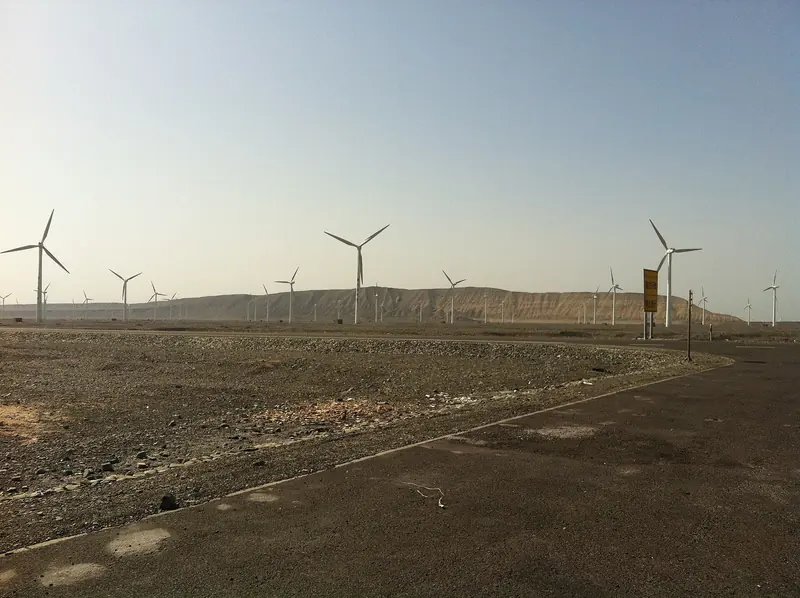
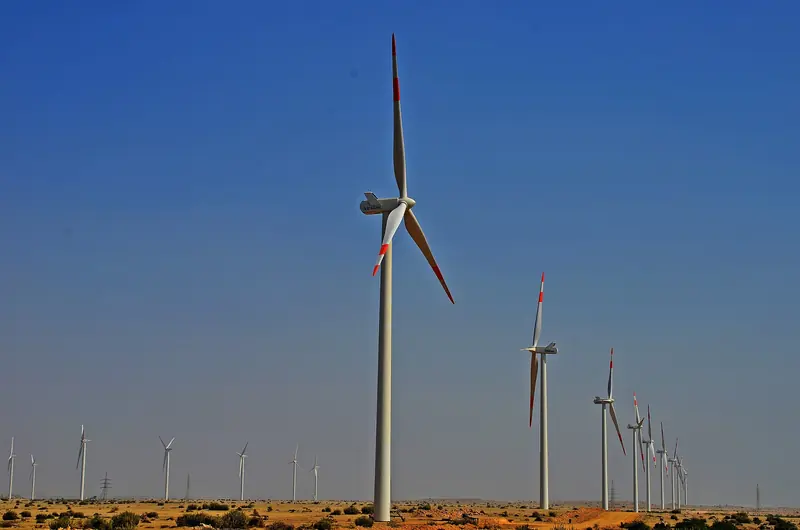
The Gharo-Jhimpir wind corridor in Thatta and Jamshoro is Pakistan's proven commercial wind province. By late 2024, thirty-six wind power plants with a combined capacity of around 1,845 megawatts had been installed there between 2013 and 2022 under Renewable Energy Policy 2006 pathways.
Several new gas-fired power plants in the United States are being marketed as hydrogen-capable. Kindle Energy says its 678 megawatt Magnolia plant in Louisiana, due in 2025, could cofire up to 50% hydrogen.
Late September 2024 brought formalisation of Pakistan’s Extended Fund Facility pathway after months of staff-level negotiation. Energy is not a side letter in that programme.
On 15 September 2024 trucks belonging to the Nigerian National Petroleum Company began loading petrol at the Dangote refinery in Ibeju-Lekki, Lagos. It was a moment Nigeria had waited decades for: domestically refined gasoline from a 650,000 barrel-a-day plant, in a country that has exported crude and imported almost all of its fuel for most of its history.
By September 2024, United States transmission providers are deep into compliance with FERC Order No. 2023 and the March 2024 rehearing order, Order No. 2023-A. The headline reform is familiar: replace serial first-come studies with first-ready, first-served clusters; demand financial readiness and site control; penalise late studies; and modernise modelling for inverter-based resources. The ground-level question is whether those tariff words are shortening time-to-interconnection for projects that can actually build.
European electricity markets in 2024 are delivering a clearer decarbonisation signal than many critics expected after the 2022 price crisis, while simultaneously exposing the next binding constraint: flexibility. The European Commission's quarterly market reporting, completed for the full year in March 2025, would show renewables reaching 47% of the EU power mix in 2024, with renewable generation up 93 TWh.
Mario Draghi's report on the future of European competitiveness, published on 9 September 2024, put energy prices at the centre of Europe's economic problem. The former European Central Bank president argued that European companies face electricity prices two to three times those in the United States, and natural gas prices four to five times higher, and that this gap is one of the main reasons European industry is losing ground.
There is a reassuring way to read the latest federal data on household electricity prices. Between 2013 and 2023, average US residential prices rose by less than 1% in inflation-adjusted terms.
On 3 September 2024 the UK government announced the results of the sixth allocation round of its Contracts for Difference scheme. AR6 awarded contracts to a record 131 projects with a combined capacity of about 9.6 GW.
On 5 September 2024 eight OPEC+ producers chose delay over delivery. The countries that had announced additional voluntary cuts in April and November 2023, namely Saudi Arabia, Russia, Iraq, the United Arab Emirates, Kuwait, Kazakhstan, Algeria and Oman, held a virtual meeting and extended those additional voluntary production cuts of 2.2 million barrels per day for two months until the end of November 2024.
Argentina's Incentive Regime for Large Investments, known as RIGI, was created by the Ley Bases, Law 27,742, passed in June 2024 after months of negotiation between President Javier Milei's government and Congress. The implementing decree followed in August.
Two data releases this summer marked a turn in China's power sector. On 23 July the China Electricity Council reported that grid-connected wind and solar capacity had reached 1,180 GW at the end of June, 38.4 per cent of the national fleet, against 1,170 GW of coal.
In May 2024, the Trans Mountain Expansion Project began operating. It nearly triples the capacity of the only pipeline that carries Alberta crude to Canada's Pacific coast, from 300,000 barrels a day to 890,000 barrels a day, by adding 590,000 barrels a day along a route that broadly follows the original line from Edmonton to Burnaby, near Vancouver.
Pakistan’s rooftop solar surge did not begin in a seminar room. It began on factory roofs and middle-class terraces when retail tariffs climbed and Chinese panels got cheap.
The midyear figures from the Energy Information Administration confirm what the January forecasts promised. Developers and plant owners added 20.2 gigawatts of utility-scale capacity in the first half of 2024, 21% more than in the first half of 2023.
Middle East oil and gas supply security in 2024 must be described with two straits in view. Bab el-Mandeb and the Red Sea corridor have already forced tankers and LNG carriers onto the Cape route, cutting oil flows through Bab el-Mandeb to an average of 4.0 million barrels per day in 2024 through August from 8.7 million barrels per day in full-year 2023, according to EIA analysis of Vortexa data.
Henry Hub remains the reference point that ties United States power prices, industrial gas contracts and LNG netbacks into one conversation. In mid-2024 that conversation is about competition.
Coal units in the United States rarely retire only because a speech demanded it. They retire when competing gas combined-cycle energy, rising compliance costs, and poor capacity factors make continued operation a losing proposition.
The first half of 2024 gave the US gas market its lowest prices in a generation. The Henry Hub monthly average fell from $3.18 per million British thermal units in January to $1.49 in March, which the Energy Information Administration says was the lowest inflation-adjusted monthly average since at least 1997.
On 14 July 2024 Pakistan began a power-sector tariff rebasing process framed as part of cost recovery under its IMF programme pathway, to be followed by quarterly adjustments and monthly fuel price changes. For consumers, rebasing feels like another bill shock.
On 3 July 2024 Vietnam's government issued Decree 80/2024/ND-CP, establishing a mechanism for direct power purchase agreements between renewable energy generators and large electricity consumers. It took effect immediately.
Coal is unfashionable in climate communiques and still central in seaborne energy trade. That tension is the starting point for any honest mid-2024 assessment.
On 9 July 2024 the president signed into law the Accelerating Deployment of Versatile, Advanced Nuclear for Clean Energy Act, the ADVANCE Act. According to the Senate Environment and Public Works Committee, the bipartisan bill (S.870) passed the Senate by a vote of 88 to 2 and the House by a vote of 393 to 13.
For most of the past five years, US offshore wind was described in terms of targets. States along the Atlantic coast set goals measured in gigawatts, and the federal government set a national ambition of 30 GW by 2030.
On 5 July 2024 Eskom announced that South Africa had gone 100 consecutive days without load-shedding, counting from 26 March. The last comparable stretch was between September and December 2020.
The Panama Canal Authority announced in June that it will raise daily booking slots to 35 from August, after higher rainfall at Gatún Lake allowed it to ease restrictions that had constrained shipping since 2023. Neopanamax crossings through the larger locks will also increase.
In 2023, grid operators in the Southwest Power Pool and the Midcontinent Independent System Operator curtailed an hourly average of 800 megawatts of wind generation, compared with less than 200 MW in 2019. Curtailment means a wind farm that could have generated was told not to.
On 19 June 2024 the Union Cabinet approved a viability gap funding scheme for offshore wind with a total outlay of Rs 7,453 crore. Of that, Rs 6,853 crore is meant to support the installation and commissioning of 1 GW of offshore wind, split as 500 MW off the coast of Gujarat and 500 MW off Tamil Nadu, and Rs 600 crore is a grant to upgrade two ports for the heavy logistics that offshore turbines demand.
The European Union's reform of its electricity market design has now completed its legislative journey. After the Council's final approval in May, the package was published as Regulation (EU) 2024/1747, dated 13 June 2024, amending the 2019 electricity regulation, alongside Directive (EU) 2024/1711 amending the electricity directive.
On June 11 the Federal Energy Regulatory Commission authorized the Mountain Valley Pipeline to begin service. The 303-mile line can carry up to 2.0 billion cubic feet per day from Wetzel County, West Virginia, to Transco's compressor station 165 in Pittsylvania County, Virginia, where the gas joins the largest interstate system in the country.
On 30 May 2024 India met a record maximum power demand of 250 GW. The Ministry of Power's statement, issued the same evening, added that all-India non-solar demand, the demand that must be met after sunset, had touched an all-time high of 234.3 GW the day before.
On 28 May 2024 Carbon Brief published an analysis by Lauri Myllyvirta of the Centre for Research on Energy and Clean Air showing that China's carbon dioxide emissions fell by 3 per cent year on year in March 2024. It was the first monthly decline since China lifted its zero-Covid controls in December 2022, and it ended a fourteen-month run of growth.
Five years after first oil, Guyana produces about 645,000 barrels a day, all of it from a single offshore licence, the Stabroek block. Between 2020 and 2023 the country added an average of 98,000 barrels a day each year, making it the third-fastest growing oil producer outside OPEC over that period according to the US Energy Information Administration.
In February 2023, the European Union and its G7 partners extended their sanctions on Russian oil from crude to refined products. The EU embargo on seaborne Russian products took effect, and the coalition set two price caps: USD 100 a barrel for products that trade at a premium to crude, such as diesel, and USD 45 a barrel for products that trade at a discount, such as fuel oil and naphtha.
In 2023, two of the oldest pillars of US renewable power had a bad year at the same time. Wind generation declined for the first time since the mid-1990s, even though 6.2 gigawatts of new turbines were added.
On April 29, 2024, Georgia Power declared that Unit 4 at Plant Vogtle had entered commercial operation, completing the first new nuclear units built from scratch in the United States in more than 30 years. Unit 3 had started commercial service on July 31, 2023.
On April 8, the moon passed across the sun along a path from Texas to Maine, and for a few minutes the United States ran a controlled experiment on its solar fleet. The Energy Information Administration had estimated beforehand that the eclipse would fully block sunlight to 6.5 gigawatts of utility-scale solar in the path of totality and partly block it to 84.8 GW across a much wider area, close to the time of peak solar output.
China imported 11.3 million barrels a day of crude oil in 2023, 10 per cent more than in 2022 and a record, according to Chinese customs data cited by the US Energy Information Administration. Its refineries processed an average of 14.8 million barrels a day, also an all-time high.
On 3 April 2024 the Nigerian Electricity Regulatory Commission issued its April 2024 Supplementary Order and raised the tariff for Band A customers from about N68 per kilowatt-hour to N225. Band A covers customers on feeders that are supposed to receive an average of at least 20 hours of supply a day.
The collapse of the Francis Scott Key Bridge into the Patapsco River on March 26 closed the Port of Baltimore to shipping. The human toll was the first story.
The United States produced an average of 12.9 million barrels per day of crude oil and condensate in 2023, according to the Energy Information Administration. That beat the previous US and global record of 12.3 million b/d, set by the United States in 2019, and it made the country the largest crude producer of any nation at any time for the sixth year running.
On 23 February 2024 Pakistan's Cabinet Committee on Energy approved construction of the first phase of the Iran-Pakistan gas pipeline on Pakistani soil: an 80 kilometre segment running from the Iranian border to Gwadar. The work is to be executed by Inter State Gas Systems, the state company responsible for cross-border gas projects, and funded through the Gas Infrastructure Development Cess, the levy collected from gas consumers for precisely this kind of project.
On 29 February 2024 India's Union Cabinet approved PM-Surya Ghar: Muft Bijli Yojana, a rooftop solar programme with a total outlay of Rs 75,021 crore. The scheme, launched by Prime Minister Narendra Modi on 13 February, aims to install rooftop systems on one crore households, ten million homes, and to give each of them up to 300 units of free electricity a month.
Two numbers published by the Energy Information Administration in February frame the US power sector in 2024. Developers and plant owners plan to add 62.8 gigawatts of utility-scale capacity this year, 55% more than the 40.4 GW added in 2023, which was itself the largest addition since 2003.
When the Fukushima Daiichi accident struck in 2011, Japan had 48 other reactors. By 2013 every one of them had been taken offline, and the country replaced the lost output almost entirely with imported liquefied natural gas.
The American natural gas market entered 2024 with two facts that look contradictory. Prices had just finished their weakest year since mid-2020, with Henry Hub averaging $2.57 per million British thermal units in 2023, about 62% below the 2022 average.
China's National Energy Administration published its 2023 power industry statistics on 26 January 2024, and the headline number deserves to be read slowly. The country connected 216.88 GW of solar capacity in a single year, up from 87.41 GW in 2022.
When the European Union adopted its fifth sanctions package in April 2022, the coal ban was its headline energy measure. The Council described a prohibition on buying, importing or transferring coal and other solid fossil fuels from Russia, effective from August 2022, and put the value of those imports at EUR 8 billion a year.
At the start of 2024, the federal statistics agency published three short notes that, read together, describe the most important change in the American power system this decade. The first said that utility-scale battery capacity could rise by 89% by the end of the year if developers bring their planned systems on line on schedule.